Introduction: Bringing Global Education Closer to Indian Students 🌍
International education is becoming an increasingly important part of higher education in India. Students are looking for academic programmes that combine strong foundations at home with opportunities to study abroad, experience different cultures, and develop skills that prepare them for an interconnected professional world.
In an important development for engineering education, VIT Bhopal University has signed a Memorandum of Understanding (MoU) with the University of Edinburgh in the United Kingdom to establish structured international academic pathways for eligible students. Announced in October 2026, the agreement introduces 2+2 and 2+3 study options connected to designated programmes in Electronics and Computer Science. These routes allow eligible students to begin their studies in India before progressing to the UK institution, subject to academic, admission, and progression requirements. <Cite refs={[“turn593726search2″,”turn593726search4”]}/>
The partnership creates a framework for students to plan their academic journeys with greater clarity. Rather than moving overseas immediately after completing school, eligible learners can first establish their academic foundation at VIT Bhopal and subsequently pursue further study at the University of Edinburgh.
The development also reflects a wider trend in higher education: universities are increasingly exploring collaborations that connect institutions, facilitate student mobility, and expose learners to different academic environments.
For students interested in engineering, computing, and technology, the announcement raises several important questions. What are the 2+2 and 2+3 pathways? Which programmes are covered? How could international academic exposure benefit students? What should applicants verify before making educational and financial decisions?
Understanding these questions can help prospective students and their families evaluate the opportunity realistically.
Understanding the VIT Bhopal–University of Edinburgh Partnership 🎓
The agreement establishes a formal framework for academic progression between VIT Bhopal University and the University of Edinburgh. Its central objective is to create structured routes through which eligible students can complete the initial stage of their studies in India and then continue at the UK institution.
According to published reports, the pathways are associated with designated Bachelor of Engineering (BEng) and Master of Engineering (MEng) programmes in Electronics and Computer Science. Progression depends on the requirements specified by the University of Edinburgh, meaning students must satisfy the relevant academic and admission conditions before moving forward. <Cite refs={[“turn593726search2″,”turn593726search4”]}/>
This distinction is essential. An academic pathway provides a defined route for students to pursue further study, but it should not be interpreted as an unconditional guarantee of admission.
The partnership is significant because it gives students a framework for planning their education across two countries. They can begin developing their technical knowledge in India before transitioning to a different university environment with its own teaching methods, assessment practices, and academic expectations.
The arrangement also creates a foundation for closer institutional engagement. International university partnerships can support knowledge exchange, academic coordination, and future collaboration in teaching or research, depending on the scope of the agreement and subsequent initiatives.
For VIT Bhopal, the announcement adds another dimension to its international academic engagement. For eligible students, it presents a potential route to combine domestic study with a period of higher education in the United Kingdom.
What Is the 2+2 Academic Pathway? 📚
The 2+2 pathway allows eligible students to complete two years of study at VIT Bhopal University, followed by two years at the University of Edinburgh. This structure provides a four-year study route for the designated programme, subject to the institutions’ applicable academic arrangements and requirements. <Cite refs={[“turn593726search2″,”turn593726search4”]}/>
The model can be useful for students who want to experience international education but prefer to begin their university journey in India.
During the initial two years, students can build their understanding of foundational subjects, develop study habits, and adjust to the demands of university-level engineering education. They can also work on technical projects, strengthen their mathematical reasoning, and develop the programming or analytical skills relevant to their chosen programme.
The transition to Edinburgh would introduce students to a different academic setting. They would need to adapt to the university’s teaching and assessment practices, engage with new classmates, and take greater responsibility for independent learning.
A successful transition requires more than completing the first two academic years. Students must understand the progression requirements, ensure that their coursework aligns with the designated programme, and meet any applicable admission or language requirements.
The 2+2 structure may appeal to learners seeking a balance between familiarity and international exposure. It allows them to begin close to home while planning for a substantial period of study abroad.
Nevertheless, students should not assume that every course at VIT Bhopal automatically qualifies for transfer. They should confirm the approved programme, credit recognition arrangements, required grades, and progression conditions with the universities before enrolling.
Exploring the 2+3 Pathway: A Longer International Study Experience 🌐
The second option is the 2+3 pathway. Under this structure, eligible students spend two years at VIT Bhopal University and then continue their studies at the University of Edinburgh for three years. The published announcement associates the arrangement with designated engineering programmes and makes progression subject to academic and admission requirements. <Cite refs={[“turn593726search1″,”turn593726search3”]}/>
The additional year at the UK institution may offer a different academic progression structure from the 2+2 route. However, students should not assume that the extra year automatically means a higher qualification or an additional degree. The precise award depends on the programme they enter and successfully complete.
A longer period abroad may provide more time to become familiar with the university’s academic culture, participate in student societies, explore research interests, and develop relationships with peers and faculty.
For engineering students, an extended international experience can also help deepen their understanding of how technical knowledge is applied in different educational and professional settings. Exposure to new perspectives may encourage them to approach design, computing, electronics, and problem-solving challenges in more than one way.
At the same time, three years of study in the UK can involve substantial financial commitments. Students and families should evaluate tuition fees, accommodation, daily living expenses, insurance, travel, visa requirements, and potential changes in exchange rates.
The most suitable pathway will depend on the official programme structure, the student’s academic objectives, and the overall cost of completing the qualification. A longer international route may be attractive to one learner, while another may prefer a different study structure.
Both pathways should therefore be evaluated using verified programme information rather than assumptions based on their names alone.
Why Electronics and Computer Science Matter in Today’s World 💻
Electronics and Computer Science are important fields in a world increasingly shaped by digital infrastructure, automation, artificial intelligence, connected devices, and data-driven decision-making.
Electronics underpins many technologies used in communications, consumer devices, industrial systems, medical equipment, transportation, and embedded computing. Computer Science provides the principles and methods used to design software, develop algorithms, manage data, and build secure digital systems.
Students who study these disciplines develop different but complementary capabilities. They may learn to analyse complex systems, write and test code, understand hardware, evaluate performance, and design solutions to technical problems.
These subjects also connect to emerging areas such as robotics, intelligent devices, cybersecurity, high-performance computing, and the Internet of Things. However, employment opportunities in any of these fields depend on a student’s skills, experience, specialisation, and the needs of the labour market.
An international academic pathway can provide an additional setting in which students deepen their technical understanding. Different approaches to teaching, project work, and independent research may help learners recognise alternative ways to solve engineering problems.
The VIT Bhopal–Edinburgh pathways are therefore relevant to students interested in combining a technical education with international academic exposure. Their value will ultimately depend on the quality of the learning experience, the fit between the programme and the student’s interests, and the student’s ability to meet the progression requirements.
For prospective applicants, a strong foundation in mathematics, logical reasoning, computing concepts, and scientific thinking remains a sensible starting point.
About VIT Bhopal University: Building an Engineering Foundation 🇮🇳
VIT Bhopal University is part of the VIT educational network and provides a university setting in which students can pursue technical and professional education.
For students considering an international pathway, the initial stage of study is especially important. Foundational coursework can establish the knowledge needed for advanced subjects and prepare students for the academic expectations of a partner institution.
Engineering education typically requires students to combine conceptual understanding with practical application. Lectures and tutorials may introduce principles, while laboratory work, assignments, team projects, and technical exercises allow learners to apply those principles.
Students also need to develop habits that support long-term academic progress. Regular revision, effective time management, collaboration, and a willingness to seek feedback can be as important as technical ability.
An international progression option may encourage students to plan their learning with a clear longer-term objective. They can investigate the target programme’s expectations and use their first two years to build the skills needed for a successful transition.
However, the partnership should not replace careful evaluation of the initial programme itself. Prospective students should examine the curriculum, faculty, learning resources, laboratory facilities, student support, tuition costs, and progression rules.
Choosing a university is a significant decision. An international pathway can be one important consideration, but it should be assessed alongside the overall educational experience offered by the institution.
The University of Edinburgh: A Globally Recognised Academic Institution 🏛️
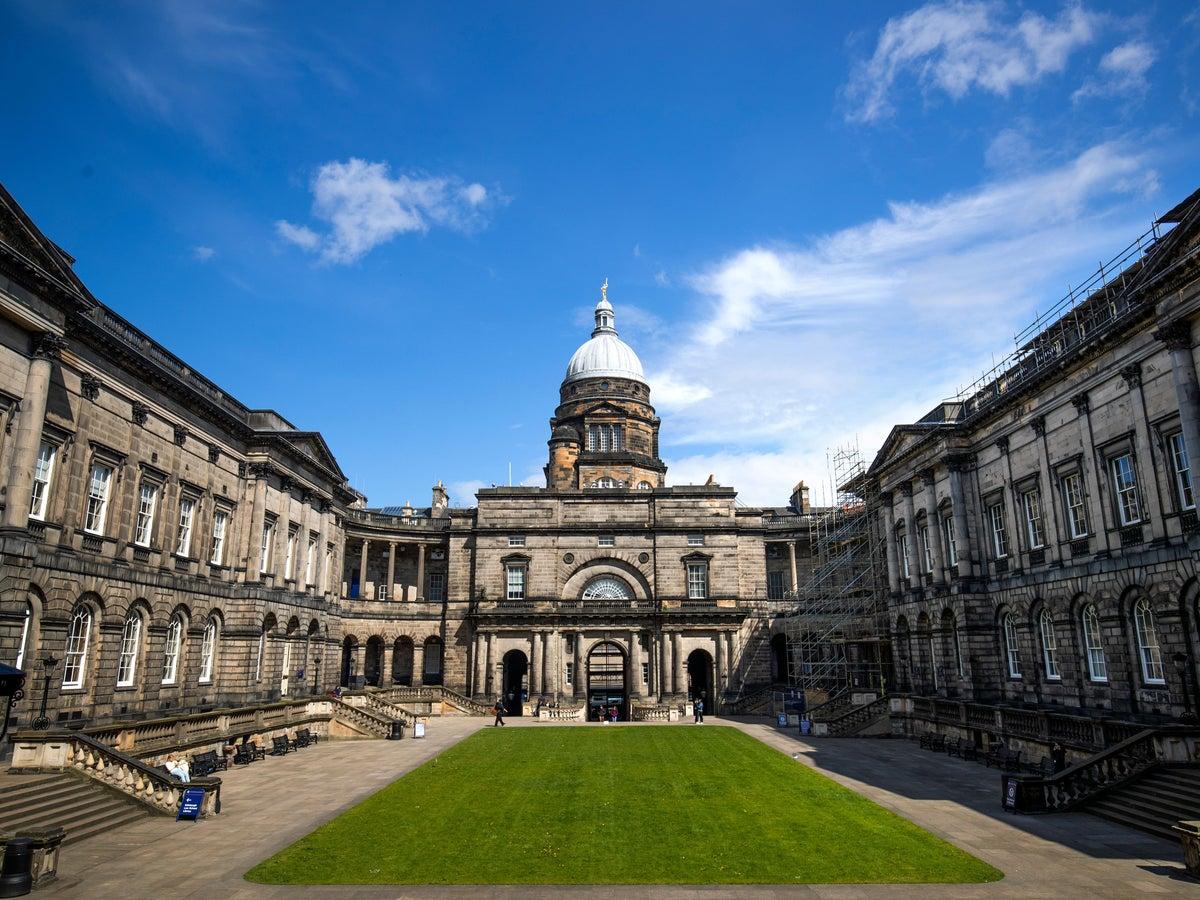
The University of Edinburgh is a historic UK university founded in 1583. It offers a broad range of academic programmes and participates in international teaching, research, and institutional collaborations. Its global engagement includes partnerships intended to support academic cooperation and international opportunities. <Cite refs={[“turn593726search6″,”turn593726search8”]}/>
For students progressing through the VIT Bhopal pathways, studying at Edinburgh would mean joining a different academic and cultural environment. The experience could involve adapting to new teaching methods, working with students from different backgrounds, and becoming more independent in managing academic responsibilities.
A university environment can contribute to learning in several ways. Lectures and coursework provide structured instruction, while projects and independent study encourage students to investigate questions beyond the immediate syllabus.
International classrooms can also introduce different viewpoints. Students may work with peers who have varied educational experiences and approaches to technical problems, encouraging them to communicate their reasoning and consider alternative solutions.
Edinburgh’s wider research environment may be of interest to students who want to learn more about current scientific and technological developments. Actual access to research projects, laboratories, specialised facilities, or particular academic opportunities will depend on the student’s programme and the arrangements available to them.
It is important to distinguish the university’s general reputation from the specific benefits of an individual course. Applicants should examine the curriculum, assessment methods, learning support, and degree requirements associated with their chosen pathway.
The partnership offers a potential route into this academic setting, while successful progression and completion remain dependent on the applicable conditions.
International Student Mobility and Its Growing Importance 🌍
Student mobility refers to the movement of learners between institutions or countries for educational purposes. It can include semester exchanges, short-term study, research visits, credit-transfer arrangements, and structured degree pathways.
These opportunities allow students to experience different academic systems and may help institutions share knowledge and develop international relationships.
For learners, international mobility can provide exposure to different classroom practices, communication styles, research traditions, and approaches to solving problems. It may also encourage greater independence and adaptability.
The VIT Bhopal–Edinburgh collaboration fits within this broader approach by establishing routes that combine study in India with further education in the United Kingdom. The arrangement provides a structured framework rather than requiring students to navigate an entirely separate application route without institutional coordination. The exact administrative and progression process should still be confirmed with the universities.
International mobility can also benefit academic communities. Students bring their experiences from one institution to another, creating opportunities for discussion and the exchange of ideas.
However, mobility alone does not guarantee better academic or professional outcomes. Students benefit most when the international experience is closely connected to their learning goals and supported by clear academic planning.
Universities must also communicate eligibility rules, costs, academic expectations, and support arrangements transparently. Such clarity allows students to make informed decisions and prepares them for the responsibilities associated with studying abroad.
Academic and Cultural Exposure: Learning Beyond the Classroom ✨
One of the potential benefits of international education is the opportunity to learn beyond formal lectures and examinations.
Moving from India to the United Kingdom can introduce students to new social environments, cultural traditions, communication styles, and daily routines. Even ordinary activities such as working on a group assignment, navigating public transport, or participating in a student society can help learners become more independent.
Cultural exposure can also encourage students to reflect on their own assumptions. Working with classmates who have different experiences may lead them to approach discussions more thoughtfully and appreciate different perspectives.
These experiences can be particularly useful in technical fields, where collaboration often involves people with different specialisations and backgrounds. Engineers may need to explain complex ideas to colleagues who focus on design, business, operations, or customer needs.
Students should nevertheless recognise that adapting to a new country can take time. Differences in weather, food, accommodation, academic expectations, and social customs may initially feel challenging.
Preparation can make the transition easier. Learning about the destination, understanding the university’s support services, budgeting for daily expenses, and developing effective study routines can help students adjust.
International exposure is most valuable when students approach it with curiosity and a willingness to participate. The objective is not simply to study in another country, but to use the experience to develop knowledge, confidence, and a broader understanding of the world.
Career Opportunities After an International Engineering Education 🚀
An international academic experience can help students explore different career directions, although career outcomes depend on individual performance, technical competence, professional experience, and labour-market conditions.
Graduates in Electronics and Computer Science may pursue opportunities in software development, embedded systems, telecommunications, electronics design, data engineering, cybersecurity, systems engineering, and related technical fields. Some may continue to postgraduate study or research, while others may explore entrepreneurship and technology-led business development.
A student who studies in both India and the United Kingdom may gain experience navigating different academic environments. This experience can help develop communication, independence, and adaptability, all of which can be useful in professional settings.
Technical employers frequently assess practical ability alongside academic credentials. Projects, internships, coding portfolios, laboratory experience, and evidence of problem-solving can help candidates demonstrate what they know.
Students should therefore use their university years to build a portfolio of meaningful work. They might contribute to a software application, develop an electronics prototype, participate in a research project, or collaborate on a technical solution to a real-world problem.
An international degree pathway should be considered one component of career preparation rather than a substitute for these activities.
Students should also research how their intended qualification is recognised by prospective employers and postgraduate institutions. Programme accreditation, the exact award, and any professional registration requirements may be relevant to particular career plans.
Financial Planning for Students Considering the UK 🇬🇧
The opportunity to study abroad can be exciting, but financial planning is essential. Families need to understand the total cost of the pathway before making commitments.
Expenses may include tuition fees at both institutions, accommodation, food, local transport, books, equipment, travel between India and the United Kingdom, visa-related charges, and other living costs.
The amount required will depend on the programme, the number of years spent in each country, the fee structure, accommodation choices, and changes in currency exchange rates. Since the 2+2 and 2+3 pathways involve different periods of study at Edinburgh, their total costs may also differ.
Students should request a written breakdown of fees and other charges from the universities. They should ask when each payment becomes due, whether fees can change between academic years, and whether any scholarships or financial assistance apply specifically to the pathway.
It is equally important to understand what happens if a student does not meet progression requirements. Families should establish whether the student can continue studying at VIT Bhopal, whether alternative routes are available, and what financial implications might follow.
A realistic budget should include an emergency reserve. Unexpected travel, changes in accommodation, medical expenses, and other unforeseen costs can place pressure on students who plan their finances too narrowly.
Students should not assume that international tuition fees, scholarships, or living expenses are covered by the MoU. These details must be confirmed separately with the institutions.
Careful planning helps families assess whether an international pathway is financially sustainable and reduces the risk of making decisions based only on the appeal of studying abroad.
Admission and Progression Requirements: What Applicants Should Check 📝
Students interested in the VIT Bhopal–University of Edinburgh pathways should begin by confirming which programmes and student cohorts are eligible.
Although the partnership establishes a structured academic route, the published information makes progression conditional on the University of Edinburgh’s applicable requirements. Students must therefore verify the exact conditions for their intended course. <Cite refs={[“turn593726search2″,”turn593726search4”]}/>
Important questions include:
- Which VIT Bhopal degree programmes qualify for the pathway?
- What minimum grades or academic performance are required?
- How are completed courses and academic credits assessed?
- Are there specific mathematics, physics, computing, or other subject prerequisites?
- Is an English-language test required, and which scores are accepted?
- What application documents and deadlines apply?
- Are there additional fees for transferring or progressing to Edinburgh?
- What are the visa and immigration requirements for international students?
- What qualification will be awarded after successful completion?
Students should obtain answers directly from the universities rather than relying entirely on social media posts or third-party summaries.
They should also ask whether progression requirements may change during the years before the transfer. A student beginning the first year of a programme may not move to Edinburgh for two years, making it important to understand the rules applicable to that cohort.
Keeping written records of official guidance can help students and families avoid misunderstandings. Where requirements are unclear, contacting the relevant admissions or international relations office is the most reliable next step.
How Students Can Prepare Before Beginning the Pathway 🎯
Students do not need to wait until they move abroad to start preparing for international study. Several practical steps can strengthen their academic readiness and make the transition smoother.
First, they should focus on foundational subjects. Mathematics, programming, scientific reasoning, and problem-solving skills can support future learning in electronics and computing.
Second, they should develop effective study habits. University-level work often requires independent reading, regular revision, careful planning, and the ability to manage several assignments simultaneously.
Third, students should practise communicating technical information. Writing clear reports, explaining a design, documenting code, and presenting project results are useful skills in both academic and professional settings.
Fourth, they should build confidence in collaborative work. Group projects can teach students how to divide responsibilities, resolve disagreements, incorporate feedback, and meet shared deadlines.
Fifth, they should become comfortable with independent research. Learning how to identify reliable sources, assess evidence, and explain conclusions can prepare students for more advanced coursework.
Finally, they should develop an understanding of life in the United Kingdom. Researching accommodation, transport, local services, academic support, and budgeting can reduce uncertainty before the move.
These steps are useful regardless of whether a student ultimately follows the 2+2 or 2+3 route. A strong academic foundation and thoughtful preparation make it easier to respond to the challenges of international education.
Challenges and Responsibilities of Studying Abroad 🌱
International study offers opportunities, but it also introduces responsibilities that students should consider realistically.
The first challenge is academic adjustment. Different institutions may use different assessment methods, expectations for independent learning, and approaches to classroom participation. Students may need time to adapt to these differences.
The second is personal independence. Living abroad can require students to manage cooking, laundry, budgeting, travel, appointments, and daily responsibilities without their usual family support.
The third is cultural adjustment. Differences in communication, social customs, weather, and everyday routines can initially feel unfamiliar. Building friendships and participating in campus activities can help students develop a sense of belonging.
Financial management is another important responsibility. Students must monitor spending, understand payment deadlines, and avoid relying on uncertain sources of funding.
Students should also understand the conditions attached to their immigration permission. Rules governing study, employment, and residence can vary, so official UK government guidance should be consulted before making plans.
Universities typically have student support services, but the exact services available to participants in this particular pathway should be confirmed. Students should ask about academic advice, wellbeing support, accommodation guidance, and international student assistance before travelling.
Recognising these challenges does not diminish the value of international education. Instead, it allows students to prepare carefully and approach the experience with realistic expectations.
The Wider Impact on India’s Higher Education Landscape 🇮🇳
International academic partnerships can contribute to the evolution of India’s higher education sector by creating additional routes for students to access overseas learning environments.
Structured pathways may provide more clarity than informal arrangements because students can investigate the academic progression route before beginning their studies. Where course mapping and progression requirements are clearly defined, learners can plan their education with a better understanding of the steps involved.
Such partnerships can also encourage Indian institutions to review their international engagement, academic coordination, and student support systems. They may create opportunities for institutional learning and future collaboration, depending on the agreements reached and how they are implemented.
For students, the most important issue is whether a pathway delivers a coherent educational experience. Clear admission rules, appropriate academic preparation, transparent fees, and reliable guidance are essential.
The VIT Bhopal–Edinburgh agreement contributes to the broader discussion about how Indian universities can connect domestic education with international academic opportunities. It also highlights the importance of giving students accurate information before they commit to a programme.
International partnerships should be judged by their practical implementation as well as their announcement. The availability of places, academic outcomes, student support, and the long-term operation of the pathway will help determine its value.
Frequently Asked Questions About the VIT Bhopal–Edinburgh Pathways ❓
What is the VIT Bhopal University–University of Edinburgh partnership?
It is an MoU establishing structured 2+2 and 2+3 academic pathways for eligible students, allowing them to begin their studies at VIT Bhopal and progress to designated programmes at the University of Edinburgh, subject to the applicable requirements. <Cite refs={[“turn593726search2″,”turn593726search4”]}/>
What does the 2+2 pathway mean?
Students complete two years at VIT Bhopal University and then study for two years at the University of Edinburgh under the designated pathway.
What does the 2+3 pathway mean?
Students complete two years at VIT Bhopal and then continue at the University of Edinburgh for three years under the applicable programme structure.
Which subjects are covered?
Published reports identify designated BEng and MEng programmes in Electronics and Computer Science. Students should confirm the specific programme options and eligibility criteria with the universities.
Is admission to Edinburgh guaranteed after two years?
No. Progression is subject to the University’s academic, admission, and other applicable requirements. Students should confirm all conditions before enrolling.
Have the tuition fees and scholarships been confirmed?
The announcement details referenced here do not establish a complete fee schedule or guarantee scholarships for pathway students. Applicants should request the latest official financial information directly from both institutions.
Where can students find further information?
Students should consult the official websites of VIT Bhopal University and the University of Edinburgh. They should contact the relevant admissions or international relations teams for programme-specific guidance.
Conclusion: A Promising Route to International Academic Exposure 🌟
The partnership between VIT Bhopal University and the University of Edinburgh marks an important development in international academic collaboration. Through its 2+2 and 2+3 pathways, the agreement establishes structured routes for eligible students to begin their education in India and continue at a UK university.
For learners interested in Electronics and Computer Science, the opportunity could combine a domestic academic foundation with international study, new perspectives, and experience in a different educational environment.
The potential benefits extend beyond the classroom. Students may develop greater independence, improve their communication skills, and learn to work with people from different backgrounds. These experiences can support personal development and help prepare learners for an increasingly interconnected professional world.
At the same time, applicants must approach the opportunity with careful planning. Academic eligibility, progression conditions, tuition fees, living costs, immigration requirements, and the precise qualification awarded all deserve close attention.
The announcement is a useful starting point for students considering international engineering education, but the final decision should be based on complete and verified information.
Ultimately, the value of a global academic pathway lies in the quality of the education, the skills students develop, and the opportunities they are prepared to pursue. With realistic expectations and thoughtful preparation, eligible students can make better-informed decisions about whether this India–UK route aligns with their academic ambitions.