
Introduction 🎓
The latest QS Asia University Rankings 2027 have brought significant attention to India’s higher education system, highlighting both its growing international presence and the challenges it faces in competing with leading universities across Asia. The Indian Institute of Technology Delhi (IIT Delhi) has emerged as India’s highest-ranked institution, securing the 66th position in the regional rankings. However, the performance of Indian universities also reveals a concerning trend: several of the country’s most prestigious institutions have slipped compared with the previous edition.
Meanwhile, universities from mainland China and Hong Kong continue to demonstrate remarkable strength in the Asian higher education landscape. The University of Hong Kong has retained the first position, followed by Peking University and Tsinghua University. Their performance reflects the increasing influence of Asian universities in global education, research, innovation and international academic collaboration.
Released on November 3, 2026, the QS World University Rankings: Asia 2027 evaluate 1,722 universities across 26 higher education systems. The latest edition includes 195 new entrants, making it a highly competitive assessment of universities throughout the region.
India remains the second-most represented higher education system, with 325 institutions included in the rankings. Mainland China leads with 448 universities, demonstrating the scale of its higher education network.
The results offer an important opportunity to examine India’s academic strengths, understand China’s growing influence and explore what universities need to do to improve their international standing. Beyond individual positions, the rankings raise important questions about research quality, teaching standards, internationalisation and the future of higher education in Asia. PR Newswire+2
🌏 QS Asia University Rankings 2027: Understanding the Big Picture
The QS Asia University Rankings have become an important reference point for students, parents, researchers and educational institutions interested in comparing universities across Asia.
Unlike rankings that focus exclusively on one country, the QS regional assessment provides a broader picture of academic performance across different education systems.
The 2027 edition includes 1,722 institutions from 26 higher education systems. This represents a substantial and diverse collection of universities, including established research institutions, technology-focused universities and newer educational organisations.
The rankings consider several indicators covering academic reputation, employer reputation, research performance, teaching resources and international engagement.
These measurements help assess universities from different perspectives rather than relying on a single academic achievement.
For students planning higher education, rankings can provide an initial reference when comparing institutions. They can also help universities identify areas where they perform well and where improvements may be necessary.
The latest results show that the competition for academic recognition is becoming increasingly intense.
India has expanded its representation, but the leading positions remain concentrated among institutions from Hong Kong, mainland China and other established Asian education systems.
This distinction is important. Having more universities included in a ranking demonstrates the size and visibility of a country’s higher education system, but it does not automatically mean that its institutions are competing at the highest academic levels.
India’s challenge is therefore twofold: continue expanding educational access while improving the quality, research influence and international reputation of its leading universities.
🏆 IIT Delhi Becomes India’s Highest-Ranked University at 66th Position
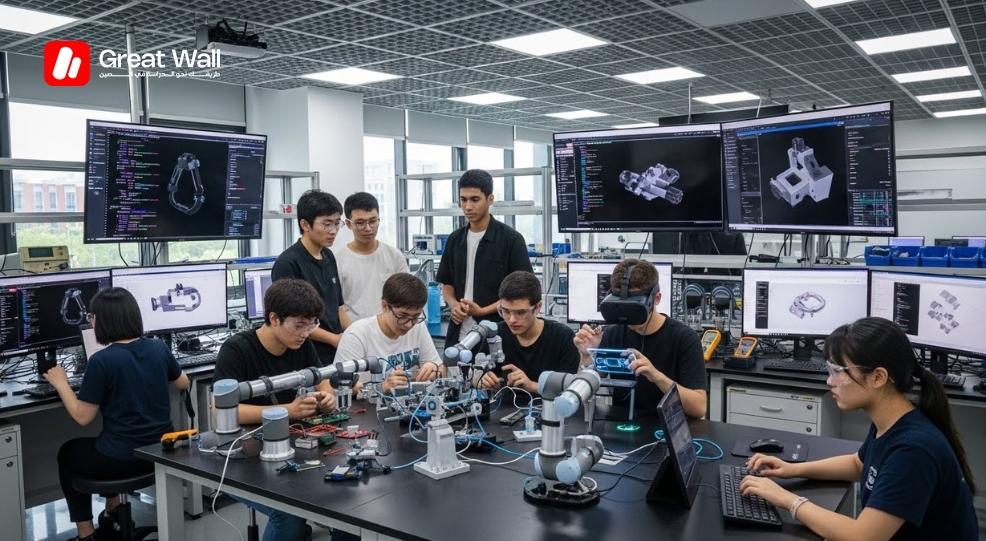
The most notable Indian achievement in the QS Asia Rankings 2027 belongs to the Indian Institute of Technology Delhi.
IIT Delhi has secured the 66th position in Asia, making it the country’s highest-ranked institution in this edition.
The achievement reinforces the institute’s reputation as one of India’s leading destinations for engineering, technology, scientific research and advanced education.
However, the latest result also represents a decline from its previous position of 59th.
Although IIT Delhi continues to lead the Indian contingent, the seven-place fall suggests that maintaining international competitiveness requires continuous improvement.
The institute has developed a strong academic ecosystem through engineering programmes, interdisciplinary research, industry partnerships and entrepreneurship initiatives.
Its graduates contribute to technology companies, research organisations, government institutions and businesses in India and abroad.
The institution’s reputation is also supported by its involvement in emerging research areas such as artificial intelligence, computer science, sustainable technologies, advanced materials and biotechnology.
Nevertheless, rankings measure several dimensions of university performance.
Strong academic reputation and graduate employability are important, but institutions must also demonstrate research influence, international academic engagement and effective teaching resources.
IIT Delhi’s 66th position highlights India’s continued presence among Asia’s established universities while reminding policymakers that global academic leadership requires long-term investment.
The institution’s performance will remain an important indicator of how Indian engineering and research universities compete in the region.
📊 India’s Top 10 Universities in QS Asia Rankings 2027
India has secured 325 places in the latest edition, with 21 institutions appearing among Asia’s top 200.
However, the country’s leading universities have experienced mixed results, and all six Indian institutions in the regional top 100 have slipped compared with the previous edition.
Here is a snapshot of India’s top 10 institutions.
| Indian institution | Asia 2027 rank | Previous rank |
|---|---|---|
| IIT Delhi | 66 | 59 |
| IISc Bengaluru | 79 | 64 |
| IIT Bombay | 83 | 71 |
| IIT Madras | 85 | 70 |
| IIT Kharagpur | 90 | 77 |
| IIT Kanpur | 97 | 77 |
| Chandigarh University | 104 | 109 |
| University of Delhi | 106 | 95 |
| IIT Guwahati | 120 | 115 |
| IIT Roorkee | 124 | 114 |
Source: QS Asia Rankings 2027 results and reported previous-edition positions. An equals sign in the original ranking indicates a shared position. Careers360+1
The table reveals the strong presence of the Indian Institutes of Technology.
Four of India’s top five institutions are IITs, while the Indian Institute of Science (IISc) Bengaluru occupies second place nationally.
IIT Bombay, IIT Madras, IIT Kharagpur and IIT Kanpur also remain important representatives of India’s engineering and research ecosystem.
Chandigarh University has secured the seventh position nationally and improved from 109th to 104th in Asia.
The University of Delhi, meanwhile, has moved from 95th to 106th.
These results demonstrate that Indian higher education is not represented exclusively by technology-focused institutions. Public universities and private institutions also contribute to the country’s growing academic presence.
🇨🇳 China Dominates the Top University Race Across Asia
One of the biggest stories of the QS Asia Rankings 2027 is the strong performance of Chinese universities.
Peking University has retained second place, while Tsinghua University has climbed six positions to secure third place.
Mainland China also has 448 universities in the rankings, making it the most represented higher education system in the region.
This performance reflects the scale of China’s academic development and its long-term investment in universities, scientific research, technology and innovation.
Peking University: Maintaining academic excellence
Peking University remains one of Asia’s most recognised academic institutions.
Its strengths span science, engineering, humanities, economics, medicine and social sciences.
The university has developed an extensive research environment that attracts scholars and students from different parts of the world.
Its second-place position demonstrates the continued international recognition of its academic work.
Tsinghua University: A significant rise
Tsinghua University has recorded one of the most notable improvements among the leading universities.
Moving from ninth place to third represents a six-position improvement.
Tsinghua is particularly recognised for engineering, computer science, architecture, technology and scientific research.
Its contribution to innovation and advanced technological development has helped strengthen its international reputation.
The university’s performance also reflects the increasing importance of research-intensive institutions in Asia.
The wider Chinese higher education ecosystem
China’s performance is not limited to two prestigious universities.
With 448 institutions represented, mainland China has developed an extensive higher education network that includes established universities, specialist research institutions and newer academic organisations.
The presence of 53 additional institutions compared with the previous edition highlights the expansion of China’s representation.
This broad institutional presence gives the country a significant advantage in regional academic visibility.
It is important, however, to distinguish mainland China from Hong Kong SAR. Both are listed separately in the QS results, and Hong Kong institutions are also performing exceptionally well.
🥇 Top 10 Universities in Asia According to QS 2027
The latest ranking shows a strong concentration of leading universities in Hong Kong SAR, mainland China and Singapore.
The University of Hong Kong has retained its leading position for the second consecutive edition.
Here are the leading institutions reported in the QS Asia Rankings 2027.
| Asia rank | University | Location |
|---|---|---|
| 1 | University of Hong Kong | Hong Kong SAR |
| 2 | Peking University | Mainland China |
| 3 | Tsinghua University | Mainland China |
| 4 | City University of Hong Kong | Hong Kong SAR |
| 5 | The Chinese University of Hong Kong | Hong Kong SAR |
| =6 | Fudan University | Mainland China |
| =6 | National University of Singapore | Singapore |
| 8 | Nanyang Technological University | Singapore |
| =9 | Hong Kong Polytechnic University | Hong Kong SAR |
| =9 | Hong Kong University of Science and Technology | Hong Kong SAR |
Source: QS official Asia 2027 results. Equal signs indicate shared rankings. PR Newswire+1
The table highlights an interesting regional pattern.
Hong Kong SAR has five institutions in the top 10, while mainland China has three and Singapore has two.
The University of Hong Kong continues to occupy the leading position, while Peking University and Tsinghua University maintain China’s strong presence near the top.
Singapore’s National University of Singapore and Nanyang Technological University remain among Asia’s leading academic institutions, although both have fallen compared with the previous edition.
The results demonstrate that academic competition across Asia is not controlled by one country alone. Different higher education systems are developing strengths in research, teaching, international collaboration and institutional reputation.
🔬 IISc Bengaluru and India’s Research Strength
The Indian Institute of Science Bengaluru occupies the second position among Indian institutions, securing 79th place in the regional rankings.
Although its overall position has fallen from 64th in the previous edition, IISc continues to demonstrate the strength of India’s scientific research ecosystem.
The institute is internationally recognised for advanced research in engineering, physical sciences, biological sciences, mathematical sciences and interdisciplinary technology.
Its research environment plays an important role in developing scientific knowledge and training future researchers.
One particularly encouraging finding in the 2027 rankings concerns India’s performance in the Papers per Faculty indicator.
This indicator measures research publication output relative to academic staff.
IISc Bengaluru ranks first in Asia in this category.
Other Indian institutions also perform strongly:
- IIT Madras ranks third.
- IIT Delhi ranks seventh.
- IIT Roorkee ranks eighth.
- IIT Ropar ranks ninth.
In total, 27 Indian universities feature among Asia’s top 50 institutions for Papers per Faculty.
This is a significant achievement because it demonstrates that Indian universities are producing substantial research output relative to their academic workforce.
However, research quantity and research influence are not identical.
A university may publish many research papers without necessarily achieving the same level of international citation impact.
India’s performance in the Citations per Paper indicator suggests that improving research influence remains an important priority.
This distinction helps explain why strong research productivity does not always translate into a higher overall position in international rankings. Careers360+1
📚 Why Are Indian Universities Slipping in the Rankings?
The decline in the positions of India’s leading institutions has generated important questions about the country’s academic competitiveness.
IIT Delhi moved from 59th to 66th.
IISc Bengaluru declined from 64th to 79th.
IIT Bombay moved from 71st to 83rd, while IIT Madras slipped from 70th to 85th.
IIT Kharagpur and IIT Kanpur also experienced declines.
These changes do not necessarily indicate that the institutions have become academically weaker.
University rankings are comparative assessments. An institution can improve in certain areas and still fall if competing universities improve more rapidly.
Several factors may influence India’s performance.
Research impact
Indian universities produce a considerable volume of academic research, but the influence of that research needs further improvement.
International citations, research collaboration and high-impact publications can strengthen institutional visibility.
Internationalisation
Universities increasingly compete to attract international students, researchers and academic partnerships.
Institutions with diverse international communities can develop stronger global connections.
Academic reputation
Reputation develops over time through teaching quality, research achievements, graduate success and international recognition.
Teaching resources
Access to qualified faculty, modern laboratories, libraries and research facilities can influence the quality of the educational experience.
Global competition
Universities across Asia are investing in research infrastructure, international programmes and academic partnerships.
As more institutions improve their performance, maintaining an existing ranking position becomes increasingly difficult.
India therefore needs to focus on improving its academic ecosystem rather than treating rankings as an annual competition alone.
🌐 Internationalisation: An Important Challenge for India’s Universities
Internationalisation has become a major part of modern higher education.
Universities today operate in an increasingly connected academic environment.
Students want opportunities to study abroad, participate in international research programmes and interact with scholars from different countries.
International faculty members can also contribute diverse perspectives and specialised academic expertise.
The QS Asia Rankings consider several aspects of international engagement, including international faculty, international students and student exchange indicators.
India has room to improve in these areas.
Although Indian universities have strong domestic student populations and substantial academic resources, international participation remains an important development opportunity.
There are several ways institutions can strengthen their international presence.
Expanding global partnerships
Indian universities can establish academic relationships with universities in Europe, North America, East Asia and other parts of the world.
These partnerships can support joint research, faculty exchanges and collaborative educational programmes.
Attracting international students
Universities can develop programmes that appeal to international learners through quality education, accessible admissions and student support.
Encouraging student exchanges
Exchange opportunities allow Indian students to experience different academic systems while helping foreign students understand India’s educational environment.
Recruiting international researchers
Bringing experienced international scholars into Indian institutions can strengthen research collaboration and academic diversity.
Internationalisation should not be treated simply as a ranking strategy.
It creates opportunities for students and researchers to participate in a wider academic community.
🏫 India’s Growing University Representation: 325 Institutions in QS Asia 2027

Despite the decline experienced by several leading institutions, India’s representation in the QS Asia Rankings remains significant.
A total of 325 Indian universities feature in the 2027 edition, including 34 new entrants.
India therefore remains the second-most represented higher education system in the region after mainland China.
This is an important achievement for a country with a large and diverse higher education population.
The expansion of university representation indicates that institutions beyond the traditional group of prestigious universities are gaining international visibility.
It also demonstrates the growing diversity of India’s educational ecosystem.
Private universities, public universities, specialised institutions and research-focused organisations are all contributing to the country’s presence.
Some institutions have recorded particularly notable improvements.
Chandigarh University
Chandigarh University has improved from 109th to 104th place.
Its result demonstrates that Indian institutions outside the traditional IIT and IISc group can also strengthen their regional standing.
GLA University
GLA University has made a remarkable improvement, rising to 491st place.
Woxsen University
Woxsen University has also recorded a substantial upward movement, reaching 499th.
Manipal Academy of Higher Education
Manipal Academy of Higher Education has moved into Asia’s top 200 at 195th position.
These developments show that India’s higher education progress is not restricted to a handful of famous institutions.
A wider range of universities is becoming part of the regional academic conversation. Careers360+2
🧠 Staff with PhD: Another Area Where India Performs Strongly
One of the encouraging findings in the QS Asia Rankings 2027 concerns the number of academic staff holding doctoral qualifications.
India has demonstrated considerable strength in the Staff with PhD indicator.
According to the reported results, 15 Indian universities share the top position in Asia for this measure, while 47 Indian institutions appear in the regional top 100.
This reflects the importance of qualified academic professionals in India’s higher education system.
Faculty members with doctoral qualifications contribute to research, teaching, supervision and the development of new academic programmes.
They also help universities establish research laboratories, guide postgraduate students and participate in international academic collaborations.
However, having a large number of doctoral-qualified faculty members is only one part of building an excellent university.
Institutions must also provide suitable research funding, modern infrastructure, academic freedom and opportunities for collaboration.
A strong faculty community needs an environment where researchers can pursue innovative ideas and produce work with meaningful academic and social impact.
For India, improving the connection between doctoral education, research investment and international collaboration could become an important pathway towards stronger rankings.
💻 Technology, Innovation and the Future of Asian Universities
Technology is transforming the way universities operate across Asia.
Artificial intelligence, robotics, biotechnology, semiconductor research, renewable energy and advanced computing are creating new opportunities for academic institutions.
China has invested heavily in technology-focused research and innovation, while universities in Hong Kong and Singapore have developed strong international research networks.
Indian institutions also have considerable potential in these areas.
The IITs and IISc have established research capabilities across engineering, computer science and emerging technologies.
However, the next stage of development requires stronger connections between academic research and practical applications.
Universities can contribute by:
- Establishing advanced laboratories for emerging technologies.
- Encouraging interdisciplinary research.
- Supporting student-led innovation projects.
- Developing partnerships with technology companies.
- Expanding entrepreneurship and startup programmes.
- Encouraging international research collaborations.
Artificial intelligence is particularly important.
Universities must prepare students not only to use AI tools but also to understand their technical foundations, ethical implications and practical limitations.
Research in AI can also contribute to healthcare, agriculture, education, manufacturing and environmental sustainability.
The universities that successfully combine academic excellence with technological innovation may strengthen their international competitiveness in the coming years.
👩🎓 What the QS Asia Rankings Mean for Indian Students
University rankings often influence the decisions of students preparing for undergraduate and postgraduate education.
For students in India, the QS Asia Rankings 2027 provide useful information about the regional standing of leading institutions.
However, choosing a university based entirely on its ranking can be misleading.
A university’s overall position does not necessarily indicate that it is the best option for every course or career objective.
Students should consider several factors before selecting an institution.
Course quality: A university may perform strongly overall but have different levels of excellence across individual academic departments.
Faculty expertise: Experienced professors and research supervisors can make a significant difference to academic development.
Infrastructure: Laboratories, libraries, classrooms and research facilities contribute to the learning experience.
Placement opportunities: Students should examine employment outcomes, industry partnerships and internship opportunities.
Research opportunities: For students interested in postgraduate studies, access to research projects and experienced supervisors is particularly important.
International exposure: Exchange programmes and international collaborations can help students develop broader academic perspectives.
IIT Delhi, IISc Bengaluru and the other leading Indian institutions continue to offer important opportunities for students interested in advanced education.
At the same time, institutions outside the traditional top group may provide excellent programmes in particular fields.
The best university is ultimately the one that matches a student’s academic interests, career goals and learning requirements.
📈 What India Can Learn from China’s Higher Education Strategy
The performance of Chinese universities provides several lessons for India’s higher education policymakers.
China’s strong representation reflects the scale of its university network, while the leading positions of Peking University and Tsinghua University demonstrate the international recognition of its research institutions.
India can learn from several aspects of this broader development.
Long-term research investment
Scientific research requires consistent financial support and long-term planning.
Universities need resources to develop laboratories, recruit researchers and conduct advanced investigations.
Institutional autonomy
Academic institutions benefit from an environment that allows researchers and educators to pursue innovative ideas and develop specialised programmes.
Industry partnerships
Collaboration between universities and businesses can help convert academic research into practical technologies and commercial innovations.
International academic networks
Global partnerships can improve research quality and increase the visibility of universities.
Infrastructure development
Modern laboratories, digital libraries, research facilities and student support systems are essential for a competitive academic environment.
India already has several important research institutions and national education initiatives.
The challenge is to expand these strengths across a larger number of universities.
Rather than concentrating resources exclusively in a few prestigious institutions, India can benefit from developing a broader network of research-focused universities.
This would improve academic opportunities across different states and regions.
🔮 The Future of Indian Universities in Global Rankings
The QS Asia Rankings 2027 provide a useful picture of India’s current position, but they should also encourage institutions to think about their long-term development.
India has a substantial advantage in terms of its young population, expanding higher education network and growing technology sector.
Its universities have opportunities to contribute to international research in artificial intelligence, medicine, climate science, engineering and other important disciplines.
However, converting these opportunities into measurable academic progress will require consistent efforts.
Universities must improve research quality, attract international scholars, strengthen faculty development and provide students with better academic experiences.
The government can support this process through sustained research funding, effective educational policies and stronger collaboration between academic institutions and industry.
Universities themselves must also develop clear strategies for improving their teaching and research environments.
One important priority should be improving the impact of academic publications.
India’s strong Papers per Faculty performance is encouraging, but research should also contribute to meaningful scientific discoveries, technological development and solutions to real-world problems.
Another priority is internationalisation.
Greater participation in international research networks can help Indian universities become more visible and influential.
Finally, universities must remember that rankings are only one measure of educational quality.
Student satisfaction, research integrity, graduate employment, academic freedom and social contributions are equally important aspects of institutional success.
🌟 Conclusion: A Wake-Up Call and an Opportunity for India’s Higher Education System
The QS Asia University Rankings 2027 present a mixed picture for Indian higher education.
IIT Delhi has maintained its position as India’s highest-ranked institution at 66th place, followed by IISc Bengaluru at 79th and IIT Bombay at 83rd.
However, the decline experienced by several leading Indian universities highlights the increasing competitiveness of the Asian academic environment.
China’s strong representation, together with the outstanding performance of universities in Hong Kong SAR, demonstrates the growing influence of the region’s leading research and educational institutions.
At the same time, India’s presence among 325 ranked universities and its strong performance in research publications per faculty and doctoral-qualified staff offer reasons for optimism.
The country has the academic talent, research potential and institutional diversity needed to strengthen its position.
What matters now is turning these advantages into greater research influence, stronger international engagement and consistently high teaching standards.
For students, the rankings provide useful guidance when exploring higher education opportunities. For universities, they offer an opportunity to identify weaknesses and build more competitive academic environments.
For policymakers, the results underline the importance of long-term investment in research, faculty development and educational infrastructure.
The future of Asian higher education will be shaped by institutions that combine academic excellence, scientific innovation, international cooperation and meaningful student experiences.
India has already established a significant presence in this competition. Its next challenge is to move beyond representation and become a stronger leader in academic excellence.