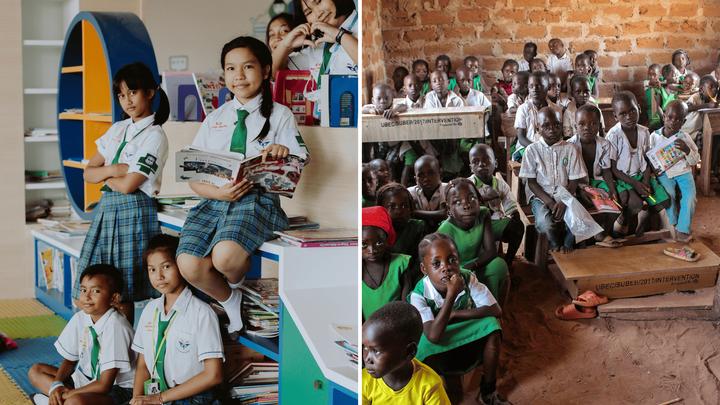


Education is widely recognized as a fundamental human right and one of the strongest foundations for social and economic development. It helps children develop knowledge, build confidence, improve their future employment opportunities, and participate more fully in society. Yet, despite decades of international efforts to make education accessible to everyone, millions of children and young people remain excluded from school or lack the resources needed to learn effectively.
The challenge is not simply getting children into classrooms. It is ensuring that every child, regardless of family income, gender, disability, nationality, or place of residence, can access safe schools, qualified teachers, suitable learning materials, and meaningful educational opportunities.
The UNESCO 2026 Global Education Monitoring (GEM) Report, titled Access and Equity: Countdown to 2030, brings this challenge into focus. According to the report, approximately 273 million children and young people were out of school in 2024, representing roughly one in six people in the relevant global school-age population. Although enrolment has expanded considerably since 2000, progress in reducing exclusion has slowed.
This research-based article examines the causes of global education inequality, its consequences for individuals and societies, and the policies that could help countries build fairer and more inclusive education systems before the 2030 Sustainable Development Goal deadline.
Understanding Global Education Inequality
Global education inequality refers to unequal opportunities to access education, remain in school, complete different levels of study, and develop the knowledge and skills needed for life.
These differences exist between countries and within individual communities. A child in a wealthy urban household may have access to a well-equipped school, trained teachers, computers, reliable internet, libraries, and private tutoring. A child from a low-income rural household may attend a school with insufficient classrooms, limited learning materials, unreliable electricity, and a shortage of teachers.
Both children may have a legal right to education, but their actual opportunities to learn can be dramatically different.
Education inequality also extends beyond school enrolment. Some children attend school regularly but do not receive adequate instruction. Others struggle because they cannot understand the language used in the classroom, lack accessible learning materials, experience discrimination, or must work to support their families.
The distinction between access to education and access to quality education is therefore essential. Enrolment figures alone cannot establish whether children are learning to read, understand mathematics, think critically, solve problems, and prepare for future employment.
UNESCO’s 2026 GEM Report examines progress in participation across pre-primary, primary, secondary, and post-secondary education, with attention to inequalities associated with wealth, sex, location, and disability. It emphasizes that long-term improvements depend on sustained policies and institutions, not isolated interventions alone.W2
The Global Education Crisis: What Recent Research Reveals

The global education crisis is complex because progress in enrolment has not translated into universal participation or equal learning opportunities.
The 2026 GEM Report documents an important contrast. In 2024, approximately 1.4 billion students were enrolled in school, with primary and secondary enrolment increasing by 327 million, or 30%, compared with 2000. Nevertheless, the number of children and young people excluded from education reached 273 million in 2024, and the out-of-school population had increased by around 3% since 2015.
These figures illustrate two realities: education systems have expanded significantly, but the remaining barriers are difficult to overcome.
In some places, governments have successfully built schools, recruited teachers, and introduced policies that encourage families to enrol their children. In others, rapid population growth, conflict, financial constraints, inadequate infrastructure, and persistent discrimination continue to limit progress.
The challenge is particularly urgent as countries work towards Sustainable Development Goal 4 (SDG 4), which calls for inclusive and equitable quality education and lifelong learning opportunities for all by 2030.
The deadline is approaching, and achieving the goal requires more than increasing the number of school places. Countries must identify which children are excluded, understand why they are excluded, and direct resources towards the communities facing the greatest disadvantages.
Poverty: The Biggest Barrier to Educational Opportunity

Poverty is one of the most persistent causes of education inequality. Although many countries provide free primary education, attending school can still involve expenses that low-income families struggle to afford.
Uniforms, textbooks, stationery, transport, meals, examination fees, internet access, and other educational expenses can create significant financial pressure. Even when tuition is free, these additional costs may prevent children from enrolling or attending consistently.
For families living close to the poverty line, the opportunity cost of education can be equally important. A child who attends school cannot always help with agricultural work, household responsibilities, family businesses, or paid employment. During periods of financial hardship, parents may feel compelled to prioritize immediate income over long-term educational benefits.
This problem can become especially severe when children lose a parent, experience displacement, or live in households affected by unemployment or illness.
Poverty can also affect learning after enrolment. Children who experience hunger, inadequate sleep, unsafe housing, or limited access to healthcare may find it harder to concentrate and participate in lessons. Those without books, quiet study spaces, or digital devices can struggle to complete assignments outside school.
The relationship between poverty and education is cyclical. Limited education can restrict employment opportunities, while low incomes can prevent the next generation from accessing better education.
How can poverty-related education inequality be reduced?
Governments can reduce these barriers through free school meals, scholarships, cash transfers, transport assistance, free textbooks, and financial support for disadvantaged families. Such programmes work best when they reach the children who need them and are combined with effective teaching.
Providing support before a child drops out is particularly important. Schools can monitor attendance, contact families when absences increase, and connect vulnerable households with social services.
Long-term progress also requires investment in employment opportunities, healthcare, housing, and social protection. Education inequality cannot always be solved by education ministries acting alone.
Gender Inequality: Why Equal Rights Do Not Always Mean Equal Access

Gender inequality remains a major concern in parts of the world, although the nature of the problem differs between countries and education levels.
Girls may face barriers related to early marriage, pregnancy, gender-based violence, restrictive social expectations, unpaid household responsibilities, and concerns about travelling long distances to school. In some communities, families may prioritize boys’ education when resources are limited.
A shortage of safe toilets, menstrual health facilities, and reliable transport can further discourage attendance, especially during adolescence. In crisis settings, the risk of harassment or violence may make school travel unsafe.
However, the global picture is more complicated than the assumption that girls always experience worse educational outcomes. The 2026 UNESCO gender report examines differences in participation and completion while showing how wealth and location interact with gender. In some countries and at certain levels, boys are also more likely to leave school early or fall behind.
This means gender-equity policies must respond to local evidence rather than rely on a single global assumption.
Building a more gender-equitable education system
Governments should enforce laws against discrimination, prevent child marriage, support pregnant students and young parents, and provide safe school environments. Scholarships and financial assistance can help families facing economic pressure.
Schools should also examine textbooks and teaching practices for gender stereotypes. Girls and boys need equal opportunities to participate in science, technology, mathematics, arts, sports, and leadership activities.
Collecting data by gender, age, location, and household income helps identify the students most at risk of exclusion. The objective is not merely equal enrolment, but equal opportunities to complete education and benefit from learning.
Disability and Inclusive Education: Leaving No Learner Behind

Children with disabilities can encounter barriers that extend far beyond the availability of school places.
Some schools lack ramps, accessible toilets, suitable seating, assistive technology, or learning materials in alternative formats. Children with visual or hearing impairments may not receive Braille resources, captions, sign-language support, or adapted instruction.
Other barriers are less visible. Teachers may not have adequate training in inclusive teaching methods, while negative attitudes can lead to bullying, isolation, or the mistaken belief that children with disabilities cannot learn alongside their peers.
Families may also struggle to obtain assessments, transport, specialist services, and information about their children’s educational rights.
UNESCO’s 2026 GEM Report highlights the development of inclusive education policies while documenting how much remains to be done. Between 2000 and 2025, the proportion of countries whose laws explicitly called for children with disabilities to be educated in inclusive settings rose from 17% to 29%. This shows policy progress, but also that explicit legal support remains limited across many national systems.
What inclusive education should look like
Inclusive education means adapting education systems to accommodate learners with different needs rather than expecting every learner to fit one rigid model.
Practical measures include accessible school buildings, trained teachers, individualized learning support where appropriate, assistive technologies, flexible assessment, anti-bullying policies, and collaboration with families.
Importantly, inclusion does not mean placing a child in an ordinary classroom without providing the support needed to participate. The child must have a meaningful opportunity to learn, interact with peers, and progress academically.
Governments should include disability considerations in school construction, teacher training, curriculum design, budgeting, and education data systems.
Rural and Urban Education: The Geography of Inequality

Where a child lives can influence the quality of education available to them.
Urban areas often have a greater concentration of secondary schools, colleges, trained teachers, libraries, healthcare facilities, and private educational services. Rural and remote communities may face long travel distances, poor roads, limited public transport, and a shortage of qualified staff.
In isolated regions, small schools may serve children from multiple age groups in the same classroom. Teachers can face difficult working conditions, limited professional development, and inadequate teaching resources.
Some children must walk for hours to reach school. During heavy rainfall, flooding, extreme heat, or other environmental disruptions, travel can become unsafe or impossible.
Urban education inequality also exists. Children living in informal settlements or disadvantaged neighbourhoods may attend overcrowded schools with insufficient facilities. Therefore, the distinction is not simply between cities and villages, but between communities with different levels of resources and public services.
UNESCO’s 2026 report specifically examines inequalities associated with location and notes that national monitoring of rural–urban differences remains incomplete in many countries.
Improving education in underserved communities
Governments can invest in local schools, reliable transport, teacher housing, rural recruitment incentives, and distance-learning infrastructure. Community-based early childhood programmes can help children begin school prepared to learn.
In very remote areas, carefully designed multigrade teaching and digital learning can supplement classroom instruction. However, technology cannot replace teachers, safe facilities, or direct support for children who are struggling.
Education planning should also consider where children actually live and how far they must travel. Building schools in underserved communities can be more effective than expecting families to overcome long distances indefinitely.
Conflict, Displacement, and Humanitarian Emergencies

War and political instability can destroy years of educational progress in a short period.
Armed conflict may damage schools, displace teachers, interrupt electricity and water supplies, and force families to flee their homes. Even when school buildings remain intact, insecurity can make attendance too dangerous.
Displaced children often face additional challenges, including lost identity documents, language barriers, interrupted learning, psychological distress, and difficulty enrolling in a new education system. Refugee children may spend extended periods in temporary settlements where educational services are limited.
The effects extend beyond the immediate crisis. Children who miss months or years of schooling may struggle to return to their previous grade level. Older children can find it increasingly difficult to re-enter education as family responsibilities and economic pressures grow.
UNESCO’s 2026 GEM Report warns that official out-of-school estimates may undercount the problem in countries affected by severe conflict. Its analysis indicates that supplementary humanitarian information suggests at least 13 million additional children and young people may be missing from the count across the ten countries most affected by conflict.
Protecting education during emergencies
Governments, humanitarian agencies, and international organizations should protect schools from attack and maintain safe learning spaces during emergencies.
Temporary classrooms, accelerated learning programmes, teacher support, psychosocial services, and flexible enrolment arrangements can help displaced children continue their education.
Education records should be transferable between regions and countries so that displacement does not erase a student’s academic progress.
Humanitarian responses should treat education as an essential service alongside food, water, shelter, and healthcare. Every additional period away from school can deepen existing inequalities.
The Digital Divide: Technology Can Help, but It Can Also Exclude

Digital technologies have expanded opportunities for learning through online lessons, educational videos, virtual libraries, interactive exercises, and remote tutoring.
However, the benefits are distributed unevenly.
Children from affluent households may have personal computers, reliable broadband, quiet study spaces, and parents who can help them navigate digital tools. Children from poorer households may depend on shared mobile phones, expensive data plans, or unstable electricity.
A digital learning programme may be technically available but practically inaccessible to a student who has no device or cannot afford an internet connection.
Disability can create further barriers when platforms are incompatible with screen readers, lack captions, or provide content in inaccessible formats. Children who speak minority languages may also find that suitable digital resources are unavailable.
The digital divide therefore reflects differences in infrastructure, affordability, accessibility, and digital literacy.
Can artificial intelligence make education more equal?
Artificial intelligence could help teachers prepare lessons, provide additional practice, translate educational materials, and offer personalized explanations. Students in remote communities might benefit from learning resources that were previously difficult to obtain.
Yet AI can also reproduce existing inequalities. Tools may perform poorly in underrepresented languages, provide inaccurate information, collect student data inappropriately, or encourage learners to rely on answers without developing their own understanding.
Schools must also ensure that AI does not become a substitute for qualified teachers or meaningful interaction.
A fair digital education strategy should prioritize electricity, affordable connectivity, accessible devices, teacher training, data protection, and high-quality local-language content. Technology should address educational needs rather than simply introduce new products into classrooms.
Teacher Shortages and Unequal Learning Quality

Teachers are central to educational quality. A school can have a building, textbooks, and computers yet still struggle to provide meaningful learning if it does not have enough qualified teachers.
Teacher shortages are especially damaging in underserved communities, where schools may experience overcrowded classrooms, frequent staff turnover, and limited opportunities for professional development.
When teachers must support large numbers of students with different learning needs, individual feedback becomes more difficult. Children who fall behind in reading or mathematics may not receive the help they need before the gaps become more serious.
Teacher quality also depends on working conditions. Low salaries, inadequate housing, excessive administrative duties, limited teaching materials, and insufficient mentoring can reduce recruitment and retention.
Recruiting more teachers is therefore necessary but not sufficient. Education systems must ensure that teachers are well prepared, supported, fairly deployed, and given the time and resources to teach effectively.
Strengthening teaching systems
Governments should improve teacher education, mentoring, continuous professional development, and career progression. Financial and professional incentives can encourage qualified teachers to work in rural or disadvantaged areas.
Schools also need reliable assessments that identify learning difficulties early without turning every assessment into a high-pressure examination.
Teachers should be supported in using inclusive teaching methods, differentiated instruction, and formative feedback. Families and communities can contribute by creating supportive environments for learning at home.
Above all, education policy must recognize teachers as essential partners in reform rather than expecting them to compensate for every weakness in the system.
Language Barriers and Cultural Exclusion
Language can determine whether children feel included in school and whether they understand what they are taught.
In multilingual countries, children may begin school speaking a language that differs from the language used in textbooks and classroom instruction. If teachers cannot communicate effectively with these learners, children may struggle to understand basic concepts even when they are capable of learning them.
Indigenous communities, migrant families, refugees, and linguistic minorities can face this challenge. Cultural stereotypes and discrimination may create further obstacles, discouraging children from participating or making families feel unwelcome in educational institutions.
Language barriers can also affect parental involvement. Parents who cannot understand school communications may find it difficult to help with homework, attend meetings, or navigate enrolment procedures.
Supporting language and cultural inclusion
Schools can use multilingual teaching strategies, provide bridging programmes, and develop learning materials that reflect the languages and experiences of their students.
Teachers should receive training in culturally responsive education, while curricula should represent different communities fairly. Families should be able to communicate with schools in languages they understand whenever practical.
Respecting linguistic diversity does not mean lowering academic expectations. It means giving children the support they need to access the curriculum and develop strong literacy skills.
The Long-Term Consequences of Education Inequality

Education inequality affects far more than examination results. It shapes employment, health, economic growth, social mobility, and the ability of societies to respond to future challenges.
Economic inequality: People who receive limited education may have fewer opportunities to obtain stable, well-paid employment. When large groups are excluded from quality education, countries can lose valuable skills and productivity.
Intergenerational poverty: Children who grow up without adequate educational opportunities may find it difficult to improve their economic circumstances as adults. Their own children can face similar disadvantages if public support is insufficient.
Health inequalities: Education helps people understand health information, evaluate risks, navigate healthcare services, and make informed decisions. Limited access to education can make these tasks more difficult.
Gender inequality: Unequal educational opportunities can restrict people’s participation in employment, public decision-making, and community leadership. Girls who leave school early may face additional economic and social vulnerabilities.
Social exclusion: Education can promote interaction between different groups, but unequal access may reinforce divisions based on wealth, disability, ethnicity, or geography.
Reduced innovation: Scientific research, technological development, and entrepreneurship depend on people having opportunities to acquire and apply knowledge. Excluding large populations limits the pool of potential innovators.
These effects can reinforce one another. Poor education can contribute to low incomes, and low incomes can prevent families from accessing better schools. Breaking this cycle requires sustained investment in both education and the wider conditions that allow children to learn.
What Countries Can Do to Reduce Global Education Inequality

There is no single policy that can eliminate educational inequality everywhere. The most effective approach depends on local circumstances, but several priorities can guide national strategies.
Guarantee affordable and accessible education
Governments should reduce direct and indirect school costs through free schooling, scholarships, transport assistance, school meals, and learning-material support.
These measures must reach children who are most likely to be excluded. Financial support is particularly important for low-income households, children affected by displacement, and communities where school attendance competes with essential work or caregiving.
Invest in early childhood education
Early childhood education helps children develop language, social, emotional, and cognitive skills before they enter primary school.
When affordable early learning is available, children from disadvantaged backgrounds can begin formal education with stronger foundations. Expanding access to quality preschool programmes can therefore help reduce inequalities before they widen.
Direct more resources towards disadvantaged schools
Equal spending per student does not always produce equal opportunities. A school serving children with disabilities, remote communities, or severe poverty may need additional resources to provide comparable educational support.
Governments should use funding formulas that account for disadvantage, while monitoring whether money reaches schools and produces improvements in learning.
The 2026 GEM Report identifies equitable financing as an essential component of expanding access. It also notes that fewer than one in ten countries have a sufficiently strong equity focus according to its new index of equity-oriented policies.
Strengthen teacher recruitment and retention
Countries should invest in teacher preparation, mentoring, fair compensation, and supportive working environments.
Additional incentives may be necessary to attract qualified teachers to remote and underserved areas. Governments should also make professional development accessible throughout teachers’ careers.
Make schools inclusive and safe
Education policies must address disability access, bullying, discrimination, gender-based violence, and unsafe journeys to school.
Inclusive school design, accessible learning materials, confidential reporting systems, and effective safeguarding policies can help students attend regularly and participate with dignity.
Close digital and infrastructure gaps
Reliable electricity, drinking water, sanitation, accessible buildings, libraries, and internet connectivity are basic components of an effective learning environment.
Digital investments should be accompanied by teacher training, accessible software, technical support, and affordable devices. Governments should evaluate whether technology improves participation and learning rather than treating the number of devices distributed as the only measure of success.
Improve education data and accountability
Governments need reliable information about enrolment, attendance, completion, learning outcomes, and school conditions.
Data should be disaggregated by wealth, gender, disability, geography, and other relevant factors so that national averages do not conceal disadvantaged groups.
Education authorities should publish progress, identify persistent gaps, and adjust funding and programmes accordingly. Schools and communities should also have opportunities to explain why certain policies succeed or fail locally.
Build partnerships beyond the education sector
Education outcomes are influenced by healthcare, nutrition, transport, housing, social protection, and employment.
Partnerships between schools, local authorities, healthcare providers, community organizations, and families can address problems that teachers alone cannot solve.
International organizations can provide funding, research, technical support, and assistance during humanitarian crises. However, long-term progress depends on strong national institutions and sustained political commitment.
Global Education Inequality and the 2030 Sustainable Development Goals
Sustainable Development Goal 4 calls for inclusive and equitable quality education and lifelong learning opportunities for all. Its targets cover early childhood education, school completion, technical and higher education, literacy, skills, gender equality, inclusive facilities, and qualified teachers.
The 2026 GEM Report makes clear that the global community has made substantial progress, but current trends are insufficient to guarantee education for everyone by 2030. UNESCO’s findings also suggest that countries need to learn from successful long-term reforms rather than simply copy individual programmes without considering their local circumstances.
For example, a scholarship programme may improve attendance where financial barriers are the main problem. It may be less effective in a conflict zone where schools are unsafe or in a remote community where no secondary school exists.
Similarly, distributing computers cannot resolve educational exclusion if students lack electricity, connectivity, accessible software, or trained teachers.
The lesson is that education reform must respond to the actual barriers children face. Countries need policies that combine adequate financing, effective teaching, inclusive institutions, and support for disadvantaged families.
Progress should also be measured through more than enrolment. Whether children complete their education, acquire foundational skills, feel safe at school, and gain meaningful opportunities to continue learning matters just as much.
The Future of Global Education: Building a Fairer System for Every Child
The future of education will depend on whether countries can transform access from a privilege shaped by circumstances into a genuine opportunity available to every child.
Emerging technologies, improved teaching methods, international cooperation, and stronger public policies offer reasons for optimism. Yet these opportunities will have limited impact unless governments address the underlying inequalities that prevent children from benefiting from them.
A child living in a remote village should have the opportunity to develop their abilities just as a child in a wealthy city does. A student with a disability should receive the support needed to participate fully. A child displaced by conflict should be able to continue learning, and a family experiencing poverty should not have to choose between essential expenses and education.
Achieving these goals requires governments to invest in schools, support teachers, protect vulnerable learners, and make education financing more equitable. It also requires communities to recognize education as a shared responsibility and policymakers to evaluate progress honestly.
The 2026 UNESCO Global Education Monitoring Report provides an important reminder that expanding education is possible, but progress is neither automatic nor evenly distributed. Countries must sustain successful policies, learn from local experiences, and prioritize children who remain furthest behind.
Quality education should not depend on where a child is born, how much their family earns, or whether they have a disability. It should be a foundation for every child’s future.
The challenge is immense, but the consequences of inaction are greater. By combining equitable investment, inclusive teaching, reliable data, and long-term political commitment, the international community can move closer to a world in which every child has a fair opportunity to learn, grow, and succeed.
Research Sources and Further Reading

1. UNESCO — 2026 Global Education Monitoring Report
The primary source for global out-of-school estimates, education participation, equity, financing, and progress towards 2030.

2. UNESCO — Equity and Inclusion
Explore education inequality databases and research on differences associated with wealth, gender, location, and disability.

3. United Nations — Sustainable Development Goal 4
Learn about the international commitment to inclusive and equitable quality education and lifelong learning.
Research note: The statistics in this article primarily reflect UNESCO’s 2026 GEM Report and other cited international education monitoring sources. Global estimates can vary by reporting year, methodology, and population coverage. The article discusses established barriers and policy approaches; it does not claim that every proposed intervention will produce the same results in every country.