The opportunity to study medicine abroad has attracted thousands of Indian students who want to pursue an MBBS-equivalent medical qualification and build careers as doctors. Among the popular international destinations, Georgia has become an important choice because of its medical universities, English-medium programmes and international student community.
However, questions surrounding the recognition of foreign medical degrees have created uncertainty among students and parents. The recent Georgia MBBS row has brought an important issue into focus: Can Indian students who graduate from medical universities in Georgia return to India and practise medicine?
The answer is yes, but only if they satisfy the applicable regulatory requirements in India.
Graduating from a Georgian medical university does not automatically grant a person permission to practise medicine in India. Foreign medical graduates must meet the National Medical Commission’s (NMC) requirements, complete the prescribed internship and obtain the necessary registration.
This distinction is extremely important. Students may successfully complete their medical education abroad but still face difficulties if their course, university, internship arrangements or other qualifications do not comply with Indian regulations.
The issue is therefore not simply whether Georgia offers medical education. It is whether a particular university and programme meet the requirements that allow a graduate to pursue medical registration in India.
Understanding these rules before taking admission can help students avoid expensive mistakes and make informed decisions about their medical careers.
⚖️ Understanding the Georgia MBBS Row: Why Has It Become a Controversy?
The controversy centres on a difference between the medical qualification awarded in Georgia and the professional licence required to practise medicine independently in that country.
Georgia offers a six-year Medical Doctor (MD) programme, generally comprising 360 European Credit Transfer and Accumulation System (ECTS) credits. The qualification is designed as an undergraduate medical degree and includes academic learning and clinical training.
However, completing the degree does not necessarily give a graduate the same professional rights as a fully licensed independent medical practitioner.
Under Georgia’s medical practice system, graduates can work as junior doctors under the direction and responsibility of an authorised independent medical practitioner. To obtain independent practice rights, they generally need to complete further requirements, including a national post-diploma qualification examination and postgraduate residency in a recognised speciality.
This distinction has become the centre of the dispute with Indian regulators.
The Indian regulatory framework requires foreign medical graduates to have the appropriate registration and right to practise medicine in the country where they obtained their qualification, at a level comparable to citizens of that country.
The question is whether the junior doctor status available after graduation in Georgia satisfies this Indian requirement.
What did the NMC say?
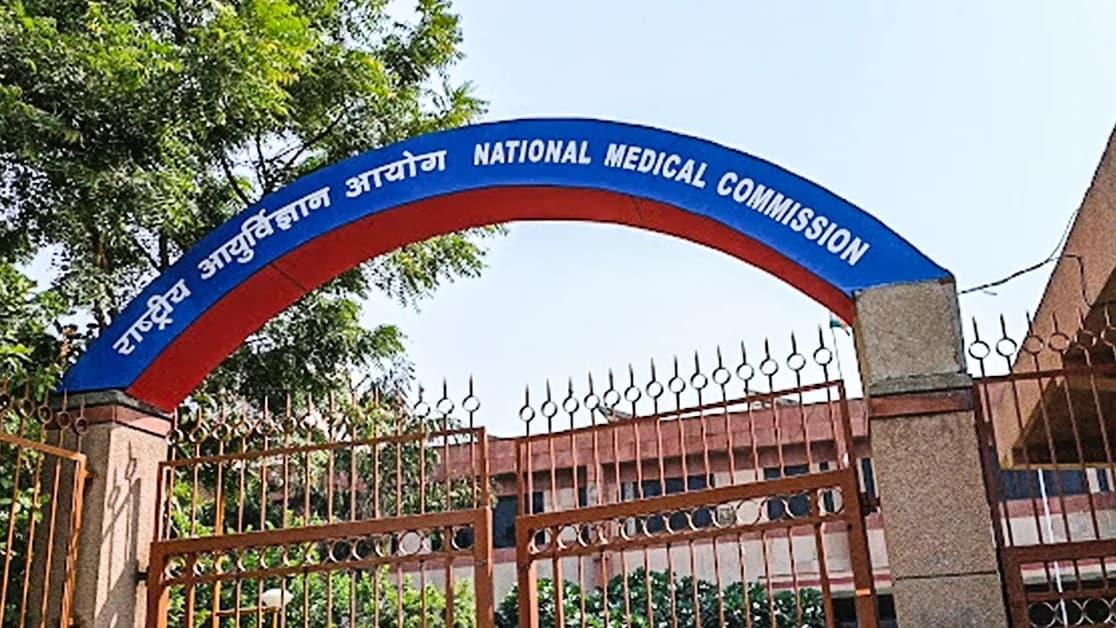
The issue gained significant attention following responses issued by the National Medical Commission through the PM Grievance Portal.
- September 24, 2026: The NMC indicated that foreign medical graduates must possess the required licence to practise medicine in the country where they obtained their degree.
- October 8, 2026: A clarification stated that junior doctor status alone would not be sufficient if independent medical practice requires additional qualifications.
- October 13, 2026: In another response, the NMC stated that the provisions relating to Georgia’s independent licensing system were being examined by the competent authority and an expert committee.
These differing responses have created uncertainty for Indian students already studying in Georgia and those considering admission.
Georgia’s National Center for Educational Quality Enhancement (NCEQE), meanwhile, has defended its six-year medical programme and the professional rights available to graduates under Georgian law.
The disagreement is not simply about whether the Georgian degree is academically valid. It concerns whether the professional registration rights attached to that degree satisfy India’s specific licensing rules. India Today+2
🇮🇳 Can Georgia MBBS Graduates Return to India and Practise Medicine?
The most important point is that returning to India after completing a medical degree and becoming legally eligible to practise medicine in India are two different things.
Indian citizens who graduate from medical universities in Georgia can return to India. However, they cannot automatically start working as registered doctors simply because they hold a Georgian MD degree.
They must satisfy the applicable NMC regulations and obtain the required registration.
For students covered by the Foreign Medical Graduate Licentiate Regulations, 2021, the requirements include:
- Completing a foreign medical course of at least 54 months.
- Completing at least 12 months of internship at the same foreign medical institution.
- Receiving medical education in English.
- Studying the mandatory subjects specified by the NMC.
- Having the required registration and right to practise medicine in the country where the qualification was awarded.
- Completing at least 12 months of supervised internship in India.
- Passing the applicable screening or licensing examination, as mandated by the regulator.
These conditions are important because satisfying only the academic requirements may not be sufficient.
The most controversial requirement in the Georgia case is the requirement relating to professional registration in the country of qualification.
Even if a student completes the six-year Georgian MD programme, questions may remain about whether their junior doctor status fulfils Regulation 4(b).
Consequently, students should not assume that completing their course automatically makes them eligible for FMGE or permanent registration in India.
The NMC’s final interpretation of the Georgian licensing arrangement is particularly important for resolving this issue. Embassy of India in Suriname+2
📜 What Are the NMC Foreign Medical Graduate Regulations, 2021?

The Foreign Medical Graduate Licentiate Regulations, 2021, are among the most important rules Indian students must understand before choosing an overseas medical university.
These regulations were introduced by the National Medical Commission to establish requirements for foreign-trained medical graduates seeking registration and permission to practise modern medicine in India.
They are particularly relevant because a medical degree awarded by a foreign institution does not automatically carry the same registration rights as an Indian MBBS qualification.
The regulations establish minimum educational, clinical training and licensing requirements.
Minimum course duration
The foreign medical programme must have a minimum duration of 54 months.
This requirement is intended to ensure that students receive adequate academic and clinical education before completing their primary medical qualification.
Internship requirements
Students must complete a minimum 12-month internship at the same foreign medical institution.
The internship is an important part of medical education because it gives students opportunities to develop practical clinical skills under supervision.
English as the medium of instruction
The regulations require medical education to be delivered in English.
This requirement is particularly relevant to Indian students choosing international medical universities because they need to understand medical terminology and communicate effectively during their education.
Mandatory medical subjects
The curriculum must include the subjects specified in the NMC regulations.
These requirements help ensure that foreign-trained graduates have received education covering the essential areas of modern medicine.
Registration in the country of qualification
This is the most important condition in the Georgia controversy.
A foreign medical graduate must be registered with the relevant professional regulatory authority, or another competent authority, in the country where the degree was awarded.
The graduate must also possess the right to practise medicine at par with citizens of that country.
Indian supervised internship and licensing examination
Eligible foreign medical graduates must complete the prescribed supervised internship in India and pass the applicable screening or licensing examination.
The regulations refer to the National Exit Test or other examination mandated by the Commission.
The precise examination route must be checked against the rules applicable to the candidate’s admission year and the regulator’s current instructions.
The main purpose of these requirements is to ensure that doctors trained outside India meet the professional standards necessary to provide safe medical care in the country. Embassy of India in Suriname+1
🏥 Understanding Georgia’s Six-Year Medical Doctor Programme
Georgia has developed an international medical education sector that attracts students from several countries, including India.
Its undergraduate Medical Doctor programme is generally structured over six years and follows the European credit system.
The programme includes basic medical sciences, clinical subjects, practical learning and hospital-based training.
During the earlier years, students generally study foundational subjects such as:
- Anatomy
- Physiology
- Biochemistry
- Histology
- Microbiology
- Pathology
- Pharmacology
As students advance, they encounter clinical disciplines, including internal medicine, surgery, paediatrics, obstetrics and gynaecology, and other areas of medical practice.
Clinical training is an essential component because it helps students connect theoretical knowledge with real patient-care situations.
The Georgian Embassy in India has previously explained that the six-year programme includes clinical rotations and an internship component during the final year.
It has also described how international students can participate in clinical training under appropriate supervision and with patient consent. Embassy of Georgia in India+1
However, students must understand that academic training and professional licensing are separate processes.
A student may successfully complete all six years of medical education without automatically becoming eligible for independent practice in Georgia.
This is why the current dispute has become so significant.
👨⚕️ What Is Junior Doctor Status in Georgia?
The term junior doctor is central to understanding the controversy.
In Georgia, graduates of recognised medical programmes may be able to work as junior doctors under the direction and responsibility of an authorised independent medical practitioner.
This arrangement provides an opportunity for graduates to participate in medical work within a regulated professional framework.
However, junior doctor status should not be confused with a licence for unrestricted independent medical practice.
The distinction can be explained through two different professional positions.
Junior doctor
A graduate may perform permitted clinical duties under the supervision and responsibility of an authorised practitioner, subject to Georgian law.
Independent medical practitioner
An individual who has completed the additional professional requirements and obtained the appropriate licence can practise independently within the scope of that licence.
Georgia’s system generally requires further steps for independent practice, including the National Post-Diploma Qualification Examination and postgraduate residency in a recognised medical speciality.
The licensing process is therefore different from simply receiving an undergraduate medical degree.
For Indian students, this creates a difficult regulatory question.
If a Georgian graduate is permitted to work as a junior doctor but cannot independently practise medicine, does that satisfy India’s requirement for professional registration and practice rights comparable to those of Georgian citizens?
That is the issue Indian authorities have been examining.
The answer cannot safely be assumed from the name of the degree or the university’s promotional material.
Students need an authoritative determination of the exact legal status of their qualification and registration. Embassy of Georgia in India+2
⚠️ Why Indian Students and Parents Are Concerned
The controversy has created understandable anxiety among Indian families.
Medical education abroad often involves a substantial financial commitment. Parents may spend years saving money to support their children’s education, accommodation, travel and living expenses.
Students also invest several years in completing their medical degrees.
If graduates later discover that their qualifications do not meet the requirements for medical registration in India, the consequences can be serious.
Some of the biggest concerns include the following.
Uncertainty about FMGE eligibility
Students are concerned about whether their Georgian qualifications and professional status will satisfy the eligibility conditions for appearing in the Foreign Medical Graduate Examination.
Additional licensing requirements
If independent medical practice in Georgia requires further examinations and residency, students may need to understand whether those requirements affect their Indian registration pathway.
Financial pressure
Postgraduate education, licensing examinations and additional training may involve extra expenses.
Career delays
Uncertainty about registration may delay the process of beginning a medical career in India.
Confusing advice from education consultants
Students have also raised concerns about conflicting information from admission agents and consultants.
Some consultants may emphasise the duration of the course, English-medium instruction and university accreditation without adequately explaining the separate professional licensing requirement.
Families should therefore verify important claims directly with the relevant authorities.
A medical admission decision should never be based only on advertisements, social media posts or verbal assurances.
🇬🇪 What Has Georgia Said About Its Medical Graduates?
Georgia’s National Center for Educational Quality Enhancement has defended the structure of its six-year Medical Doctor programme.
The authority has explained the academic framework and the professional opportunities available to graduates under Georgian legislation.
Its position highlights that graduates of Georgian medical programmes can obtain junior doctor status and work under the direction and responsibility of authorised independent medical practitioners.
It also maintains that foreign graduates and Georgian citizens have equivalent rights to hold junior doctor positions when they satisfy the applicable requirements.
The Georgian explanation is important because it provides information about the country’s own medical education and professional system.
However, India’s medical regulator applies Indian law when deciding whether a foreign-trained graduate can qualify for registration in India.
A statement from a foreign educational authority cannot independently override the conditions established by Indian legislation.
This means that both regulatory systems need to be understood.
Students should examine:
- Whether their university is properly recognised and authorised in Georgia.
- Whether their programme meets the applicable academic requirements.
- Whether their internship satisfies the Indian regulations.
- What professional registration they receive after graduation.
- Whether that registration meets the Indian requirement under Regulation 4(b).
The distinction between academic recognition and eligibility for Indian medical registration is essential.
A university may be legitimate and its degree may be valid in Georgia, while questions can still remain about the graduate’s eligibility to practise in India.
This is the central lesson emerging from the Georgia MBBS row.
📚 FMGE: The Examination Foreign Medical Graduates Need to Understand
The Foreign Medical Graduate Examination, commonly known as FMGE, is an important examination for eligible Indian citizens and other candidates covered by the applicable rules who have obtained their primary medical qualifications abroad.
It is designed to assess whether foreign-trained medical graduates have the necessary knowledge to qualify for registration in India.
For many Indian students studying in Georgia, the examination represents an important step towards returning to their home country and beginning a medical career.
However, the Georgia controversy has highlighted that passing an examination and being eligible to appear for it are two different matters.
A candidate must first satisfy the applicable eligibility requirements.
The key stages of the general pathway are:
- Complete the foreign medical degreeFinish the required academic programme and clinical training at the overseas institution.
- Meet foreign licensing requirementsObtain the registration and professional practice rights required under the applicable Indian regulations.
- Qualify for the screening or licensing examinationMeet the eligibility conditions for FMGE or the examination applicable under the current regulatory framework.
- Complete the required Indian internshipUndertake the prescribed supervised internship in India.
- Obtain medical registrationApply for the relevant registration through the competent medical authority.
Students should also understand that India’s proposed National Exit Test (NExT) framework and the applicable screening examination arrangements may change over time.
They should check the latest NMC and examination authority notifications instead of assuming that the same examination process will apply indefinitely.
🔬 What Should Current Georgia MBBS Students Do?
Students who are already enrolled in Georgian medical universities should not panic or make sudden decisions based on incomplete information.
Instead, they should take practical steps to understand their individual regulatory position.
Review the admission documents
Check the admission year, programme duration, curriculum, university authorisation and internship arrangements.
Request written clarification
Contact the university and ask for an official explanation of the professional registration available after graduation.
Understand the junior doctor pathway
Ask whether the qualification provides junior doctor status, what clinical responsibilities are permitted and what additional requirements are necessary for independent practice.
Seek clarification from Indian authorities
Students should request written guidance from the NMC regarding the application of Regulation 4(b) to their specific programme and graduation circumstances.
Preserve all academic records
Keep copies of transcripts, internship certificates, clinical rotation records, degree documents and registration-related correspondence.
Consult a qualified professional
If there is uncertainty about eligibility, students may benefit from consulting a lawyer experienced in medical education and regulatory matters.
Most importantly, students should not assume that the NMC’s October 13 response automatically guarantees eligibility. It stated that the relevant licensing provisions were under examination.
The final regulatory position needs to be established through an authoritative clarification.
🏫 How Students Should Choose a Medical University Abroad
The Georgia controversy offers an important lesson for students who are considering medical education outside India.
Choosing a university should involve much more than comparing tuition fees, accommodation costs and campus facilities.
Students must evaluate the complete educational and professional pathway.
Here are some important factors to consider.
| Factor | What students should verify |
|---|---|
| University recognition | Authorisation and accreditation in the host country |
| Course duration | Compliance with applicable NMC requirements |
| Medium of instruction | Whether the complete programme is taught in English |
| Internship | Duration, location and clinical training arrangements |
| Licensing | Eligibility for professional registration after graduation |
| Clinical exposure | Access to recognised teaching hospitals |
| Indian registration | Whether the degree satisfies applicable Indian requirements |
| Financial costs | Tuition, accommodation, travel and additional training |
Students should also understand the language requirements for communicating with patients.
Even when the academic programme is delivered in English, clinical interactions in the host country may involve the local language.
Learning basic Georgian can therefore help international students communicate more effectively during hospital training.
Families should also consider whether the university offers sufficient clinical exposure and appropriate student support.
A good medical education is not defined only by classroom teaching. Practical training, clinical supervision, patient interaction and professional development are equally important.
💬 Important Questions Parents Should Ask Education Consultants
Parents often depend on education consultants when exploring medical universities abroad.
However, the Georgia MBBS controversy demonstrates why families must independently verify important claims.
Before paying an admission fee, parents should ask consultants specific questions.
- Is the university officially authorised by the Georgian authorities?
- What is the exact qualification awarded after graduation?
- Is the complete programme delivered in English?
- Where will students complete their clinical training?
- Does the university provide the required internship?
- What professional status will graduates receive in Georgia?
- Can graduates practise independently immediately after graduation?
- Are additional examinations or postgraduate residency required?
- How does the programme satisfy the NMC Foreign Medical Graduate Licentiate Regulations?
- Is there an official written clarification regarding Indian registration eligibility?
Parents should request supporting documents rather than relying on verbal promises.
They should be particularly careful about claims such as guaranteed FMGE eligibility, guaranteed Indian registration or automatic recognition of a foreign medical degree.
No consultant should be allowed to replace the regulatory authority’s decision.
A careful admission process can help families avoid unnecessary financial and professional difficulties.
🌍 The Wider Impact on India’s Foreign Medical Education Sector
The Georgia MBBS row is not only a concern for students studying in one country.
It raises broader questions about how India evaluates foreign medical qualifications.
Thousands of Indian students consider medical education abroad because domestic medical seats are competitive and private medical education can be expensive.
International universities offer another route, but students must understand that medical registration in India is governed by Indian regulations.
This creates a shared responsibility for students, educational institutions, foreign regulators, admission consultants and Indian authorities.
Foreign universities should provide transparent information about the professional rights associated with their degrees.
Education consultants should communicate regulatory requirements accurately.
Students and parents should investigate admission claims carefully.
Indian regulators should provide clear and consistent guidance so that students can understand their eligibility before investing years in a medical programme.
A transparent regulatory system benefits everyone.
It protects students from misleading assurances while helping ensure that doctors entering India’s healthcare system meet the necessary professional standards.
🚀 What Could Happen Next in the Georgia MBBS Row?
The immediate priority is a clear determination from the Indian medical regulator.
The differing responses issued in September and October 2026 have left students uncertain about the application of Regulation 4(b).
The NMC’s examination of the Georgian licensing system is therefore an important development.
Several possible areas require clarification:
Recognition of junior doctor status: Whether the professional rights available to junior doctors in Georgia satisfy the Indian regulatory requirement.
Independent licensing: Whether obtaining an independent medical licence in Georgia is necessary before a graduate can qualify for FMGE.
Treatment of existing students: How the interpretation will apply to students who have already enrolled or completed their degrees.
Documentation requirements: What official certificates or registration records graduates must provide.
Future admissions: Whether additional guidance or requirements will apply to students planning to begin medical education in Georgia.
These questions matter because students need predictable rules when making long-term educational and career decisions.
Any final decision should be communicated clearly through official regulatory channels.
Until then, students should avoid making assumptions based on individual grievance responses or statements from admission agents.
❤️ Conclusion: A Medical Degree Is Only One Part of the Journey
The Georgia MBBS row has brought an important issue to the attention of Indian students and their families.
Completing a six-year medical degree in Georgia may provide an academic qualification, but it does not automatically guarantee the right to practise medicine in India.
The main concern is whether the professional status available to Georgian medical graduates, particularly junior doctor registration, satisfies the requirements of India’s Foreign Medical Graduate Licentiate Regulations, 2021.
The NMC’s differing responses in September and October 2026 have created uncertainty, while Georgian authorities have defended their medical education system and the professional rights available to graduates.
For Indian students, the most important step is to understand the difference between completing a medical course, obtaining professional registration abroad and becoming eligible for medical registration in India.
Families should verify every important admission claim, maintain complete academic records and seek written regulatory clarification before making expensive decisions.
Medical education requires years of dedication, practical experience and professional responsibility. Students deserve clear information about the career opportunities available after graduation.
Ultimately, the objective should not simply be to earn a medical degree abroad. It should be to obtain a qualification that provides a clear, lawful and professionally recognised pathway towards becoming a doctor in India. 🩺🇮🇳